Invest Wisely: 5 Most Popular Investments in Malaysia

Version: CN, BM
Investing in Malaysia has changed rapidly over the past few years, with inflation, global market shifts and rising living costs reshaping how Malaysians grow and protect their money.
Whether you are just starting or planning to diversify, understanding the main investment types in 2026 can help you make smarter, more confident financial decisions.
Key Takeaways:
- A balanced portfolio works better than relying on one investment alone.
- Inflation impacts returns, especially for low-risk options like fixed deposits.
- Global diversification is now an important strategy for Malaysian investors.
- Always consider liquidity, costs and your investment time horizon.
5 Popular Investments Types in Malaysia

1. Fixed Deposit
One of the most popular investment choices in Malaysia is the Fixed Deposit (FD).
With a fixed deposit, the bank and the depositor agree in advance on the tenure and interest rate. At maturity, the depositor can choose to withdraw the principal and interest, or renew the deposit.
Generally, the longer the FD tenure, the higher the interest rate offered.
When choosing where to place your FD, it’s a good idea to compare the interest rates offered by different banks and select the one that provides the best value.
Usually, FD rates are based on a minimum deposit of RM5,000 with a tenure of 1 year.
However, one disadvantage is that the returns on fixed deposits are often lower than the inflation rate.
Pros | Cons |
|---|---|
Capital is safe and easily accessible | Returns may not keep up with inflation |
Minimal volatility, stable short-term option | Opportunity cost compared to higher-performing assets |
Simple and low maintenance | Not suitable as a long-term wealth-building tool |
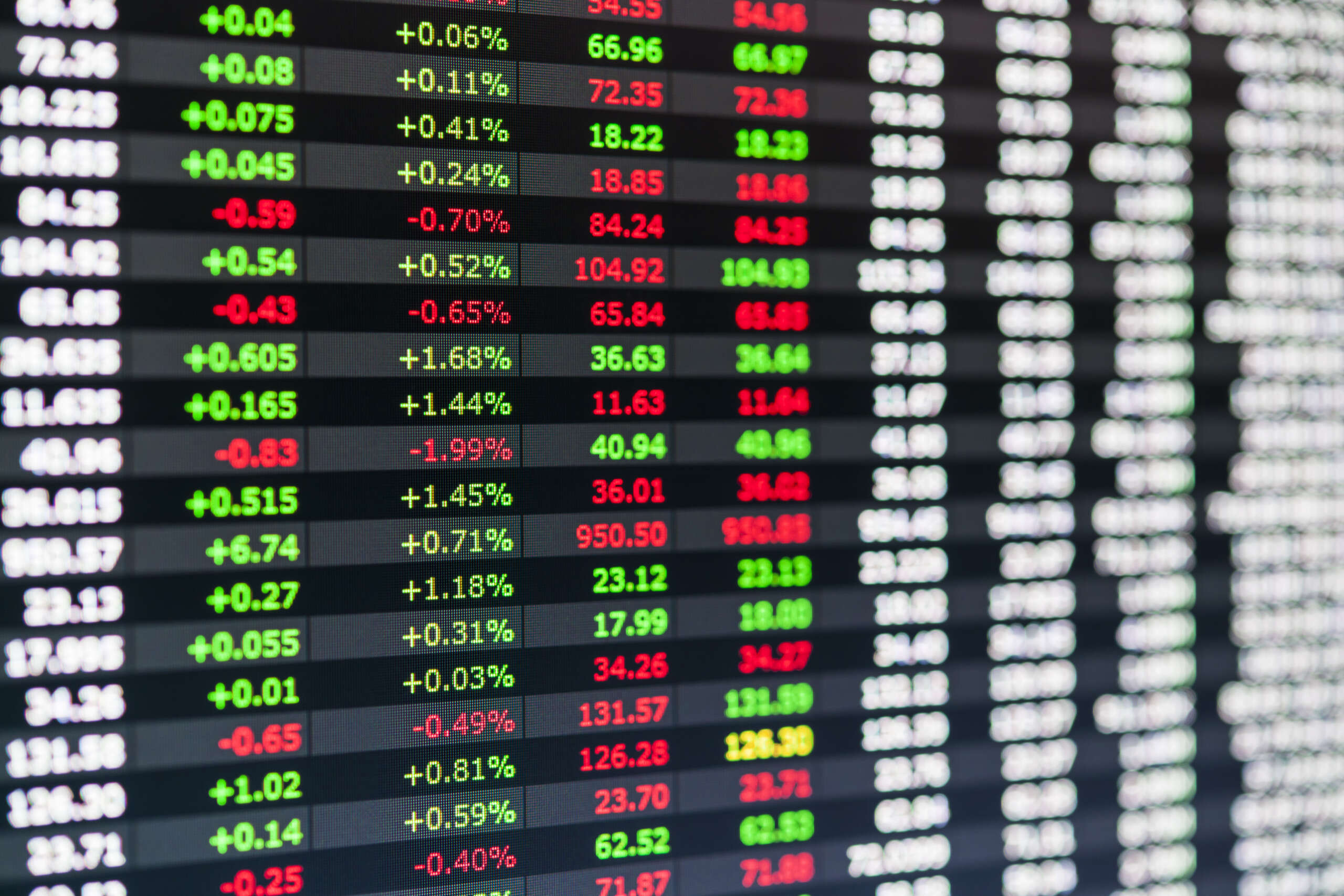
2. Stocks
When it comes to stocks, many people think they are profitable but also too risky.
In most cases, this impression is true: stocks are an investment that can offer high returns but also come with high risks.
The profit or loss of a stock largely depends on the company’s business performance.
When you invest in Company A’s stock, it means you own a portion of that company.
If Company A performs well, its stock price may rise, allowing you to gain capital appreciation, and you may also receive dividend income.
However, the stock market is full of uncertainty.
For example, looking at the FTSE Bursa Malaysia KLCI (KLSE Index), the market dropped by 24.77% in August 1998, and once again plunged by 15.22% in 2008.
Because of this volatility, many people both love and fear stock investments.
If you want to invest in stocks, you may consider seeking help from professionals to analyse your portfolio and of serious losses.
Pros | Cons |
|---|---|
High growth potential over the long term | High volatility in the short term |
Access to global markets and sectors | Currency and geopolitical risks for foreign equities |
Flexible investment entry points | Requires some risk tolerance |

3. Funds
Funds are roughly divided into stock funds and currency funds.
Equity funds are very similar to stocks in some respects. Fund managers combine a pile of stocks and then sell them to investors in small parts.
In other words, if you invest in a fund, you are buying part of a pile of stocks. Let's take a closer look at one of the most popular investments in Malaysia:
The stock fund will be divided into:
- Active funds: Actively managed funds, does not deliberately make indexed investments and aim to exceed market benchmarks. After the fund manager has raised all funds, he invests in his favourite stocks, bonds, etc., in the hope of obtaining funds that exceed market benchmarks.
- Passive funds: Does not actively seek out the performance of the market but tries to replicate the performance of the index. Since passive funds select specific indexes as tracking objects, they are usually referred to as index funds.
In addition, passive funds are also divided into two types:
- Fully Replication Index Funds: all assets are invested in the constituent stocks of the index being tracked, and the market index is wholly tracked.
- Enhanced-Index Fund (EIF): On the basis of fully tracking the index, appropriate adjustments are made according to the specific market conditions to obtain returns that exceed the tracking index.
As for currency funds, they are more stable than stock funds and have lower risks.
It is a kind of trust fund that mainly invests in short-term bank deposits, bank time deposit certificates, commercial papers, corporate bonds, and other investment tools.
In terms of interest, the currency fund will change with the market interest, so the interest is calculated daily. Investors will get high returns with high market interest, but the average annual returns are above 3%.
Pros | Cons |
|---|---|
Broad diversification across many assets | Management fees can reduce returns |
Suitable for beginners and low-effort investors | Performance depends on market conditions |
Accessible through small monthly contributions | Some funds may underperform benchmarks |

4. Gold
From a financial standpoint, gold carries the dual characteristics of both a commodity and a currency asset.
It functions as a form of commodity money and serves as an effective hedge against inflation.
When paper currency depreciates due to inflation, gold becomes a tool for preserving value, which is why many people invest in gold to diversify their investment risks.
According to the World Gold Council, gold is relatively unaffected by business cycles. Its lower volatility allows it to withstand financial crises better than many other investment assets.
For this reason, many people choose to invest in gold, as it is easy to store and tends to maintain its value. However, its ability to preserve value still depends on the economic cycle.
For example, if you bought gold for USD 36.56 in 1970 and its price rose to USD 664.30 in 1980, that would be an increase of about 17 times in 10 years, with an average annual growth rate of around 30%.
However, gold prices also experience sudden rises and drops, so timing matters.
You might think gold is always a reliable store of value.
But if you had purchased gold at USD 664.30 in 1980 and its price dropped 61% over the years to USD 256.69 in 1999, you would have suffered a significant loss.
Pros | Cons |
|---|---|
Hedge against volatility and currency fluctuations | Can be volatile in certain periods |
Historically preserves value | No dividends or passive income |
Useful as a small portion of a diversified portfolio | Physical gold incurs storage and security costs |

5. Real Estate
A list of the most popular investments in Malaysia wouldn’t be complete without real estate.
Property values generally increase year by year due to population growth and limited land availability.
Because of this, many people believe that property prices will continue to rise over the long term, making real estate one of the most stable and reliable investment options.
While Malaysian property prices are not as high as those in major Asian cities like Hong Kong, Singapore, or Tokyo, Malaysia stillranks among the top 10 countries globally for housing price growth and the highest in Asia.
Partly due to parental expectations and government incentives, many young Malaysians see property as their first investment goal.
Industry trends and economic data have also contributed to a rise in homeownership across the country.
Besides buying a home for personal use, those with stronger financial capability often purchase additional properties for investment purposes, such as renting them out. Rental income can help cover monthly commitments and maintenance costs.
As mentioned, real estate typically appreciates in value over time.
So if the property is sold years later, the price is often higher than the original purchase price, creating additional profit for the owner.
Pros | Cons |
|---|---|
Long-term appreciation in the right locations | Oversupply and weaker yields in some areas |
Rental income potential | High upfront and ongoing costs |
Tangible asset with utility for own stay | Low liquidity and longer holding period required |
There is no single best investment, only the best mix for your goals and risk appetite.
As Malaysia’s financial landscape continues to evolve, staying informed and diversifying wisely will help you build resilience and long-term growth.
Whether you are starting small or expanding your portfolio, understanding these five core asset classes is a strong foundation for smart investing in 2026.
Ready to make real estate your next investment? Share your details in the form, and we’ll help you maximize your returns.
[custom_blog_form]
Continue Reading:
- Best Housing Loan Rates to Secure (Updated Monthly)
- Malaysia’s 2026 Outlook: Roadmap for Economic and Property Stability
- 7 Facts About Bank Drafts & How To Apply For It!
Ready to Find Your Perfect Property?
IQI Global understands the property market intimately. We're not just agents — we're guides helping you understand investment potential, lifestyle benefits, and long-term value.
Know the author
Unlock Exclusive Insights
Subscribe to our emails to find out about the latest market insights, property news and trends.
Ready to Find Your Perfect Property?
IQI Global understands the property market intimately. We're not just agents — we're guides helping you understand investment potential, lifestyle benefits, and long-term value.