Cukai Taksiran: A Guide to Understanding Your Tax Obligations


Understanding the various taxes associated with property ownership in Malaysia is crucial for any property owner.
This guide provides detailed insights into four key taxes: Cukai Taksiran, Cukai Pintu, Cukai Tanah, and Cukai Petak.
Table of contents
- Types of Cukai in Malaysia and Their FunctionsCukai TaksiranCukai TanahCukai PetakCukai Pintu
- Cukai Taksiran
- Cukai Tanah
- Cukai Petak
- Cukai Pintu
- Who Needs to Pay Cukai Taksiran?
- Types of Taxes Covered Under Cukai Taksiran
- How to Calculate Your Cukai Taksiran
- How to Pay Cukai TaksiranPaying Using PBTPayLog in or create an accountSelect your state and local authority locationMake payment
- Paying Using PBTPay
- Log in or create an account
- Select your state and local authority location
- Make payment
- Penalty for late payment
Types of Cukai in Malaysia and Their Functions
Cukai Taksiran
Cukai Taksiran, commonly known as assessment tax or gate tax, is a mandatory tax levied on property owners by the local authority, such as the District Council or Municipal Council, based on the property's location.
This tax is imposed to support the maintenance and development of public infrastructure and services, including garbage collection, road repairs, and upkeep of public spaces.
Cukai Tanah
Cukai Tanah, or quit rent, is an annual tax payable to the state land office by May 31st for all landed and strata properties in Malaysia.
The amount depends on the land area, with rates varying by state, e.g., RM0.035 per square foot in Kuala Lumpur. Timely payment is essential to avoid penalties.
Cukai Petak
Cukai Petak applies to strata-titled properties like apartments and condominiums.
It ensures maintenance of shared facilities and is calculated based on the property’s floor area and usage.
Like Cukai Tanah, it requires prompt payment for smooth community operations.
Cukai Pintu
Cukai Pintu, or Cukai Taksiran, funds local services and infrastructure projects and applies to all property types, including residential and commercial.
Based on the property's annual rental value, the rates vary.
Property owners usually pay this tax, but tenants should check their rental agreements as they might be responsible for it.

Who Needs to Pay Cukai Taksiran?
Cukai Taksiran must be paid by all property owners, including those who own residential buildings, commercial buildings, industrial buildings, agricultural land, and vacant land.
The responsibility for paying this tax typically lies with the landlord, though rental agreements may sometimes stipulate that tenants are responsible.
Types of Taxes Covered Under Cukai Taksiran

Cukai Taksiran encompasses various local taxes necessary for funding public services and infrastructure.
This includes taxes on different properties, each contributing to the upkeep and development of local facilities and services.
How to Calculate Your Cukai Taksiran
Calculating Cukai Taksiran involves determining the annual rental value of the property. This value is based on the estimated gross rent that could be obtained from the property if rented out. The formula is as follows:
Annual Value = Estimated Gross Rent per Month x 12 months
Once the annual value is determined, the assessment tax is calculated using the applicable percentage rate set by the local authority:
Assessed Tax = Annual Value x Rate %
For example, if a property's annual value is RM 4,000 and the rate is 7%, the assessed tax would be RM 280 annually (or RM 140 every six months).

How to Pay Cukai Taksiran
Payment of these taxes can be made through various methods, both offline and online.
Offline payments can be made in person at local authority offices or post offices. This method provides a direct way to handle payments but may require more time and effort.
For convenience, online payment options are also available. Payments can be made via PBTPay.
Paying Using PBTPay

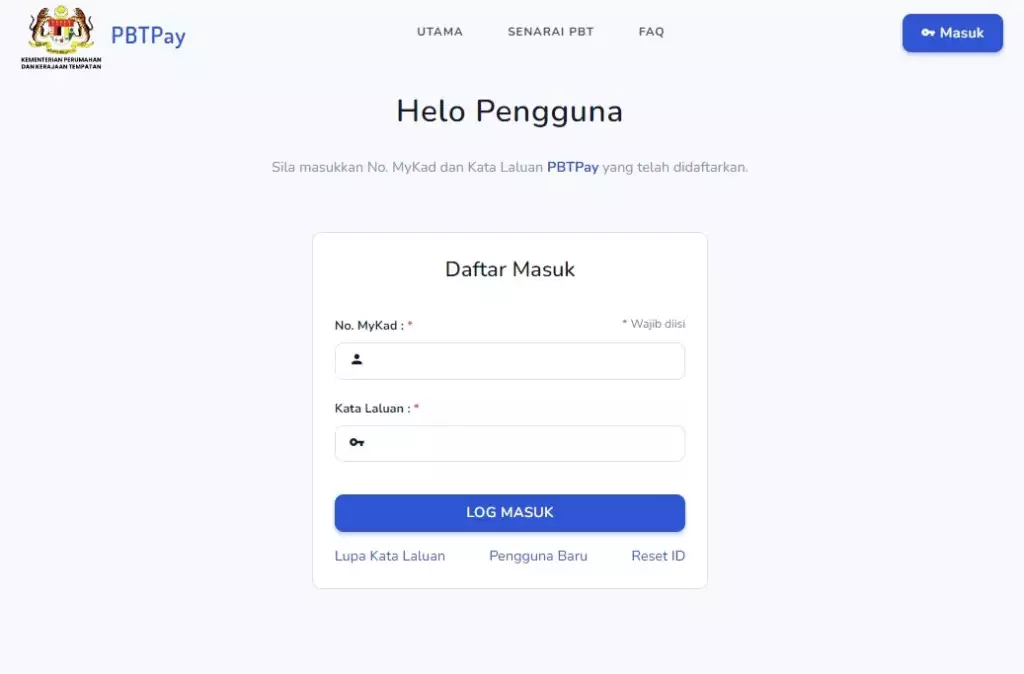
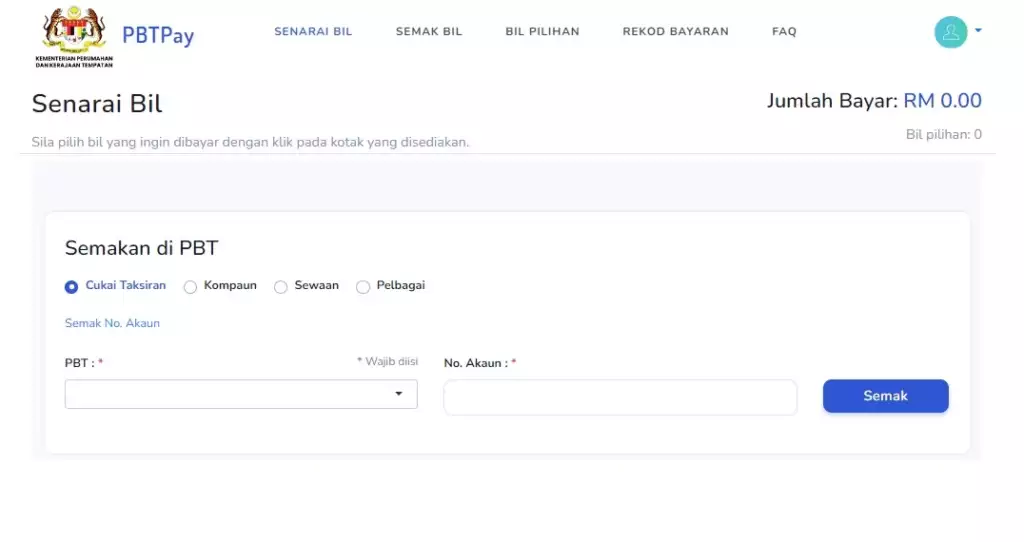
The Ministry of Housing and Local Government (KPKT) has launched an innovative initiative, PBTPay, allowing you to conveniently pay your assessment tax through a single portal. Regardless of your state, simply visit the PBTPay website to make your payment.
Here is an easy guide to help you get started:
Log in or create an account
Select your state and local authority location
Make payment
This is usually paid twice a year.
Make sure you don't miss the deadline:
For the first term (January to June), payment must be made between January 1st and February 28th each year.
For the second term (July to December), payment must be made between July 1st and August 31st each year.
Penalty for late payment
Based on the Local Government Act 1976, if you miss the assessment tax payment deadline, a Form E notice will be issued, requiring you to settle the payment within 15 days from the notice date.
If payment is not made within this period, a late fee will be added to the outstanding balance of the arrears.

Understanding property taxes in Malaysia—Cukai Taksiran, Cukai Pintu, Cukai Tanah, and Cukai Petak—is essential for property owners to ensure compliance and avoid penalties. By managing these responsibilities well, property owners can enjoy a smooth and rewarding experience in their local communities!
Ready to make informed investments? Enquire below to start your journey with us and ensure a successful property venture!
Continue reading:
- A Complete Guide to Property Taxes in Malaysia for Homeowners
- Step-by-Step Guide: How to File Your 2025 Income Tax in Malaysia
- Do I Need to Pay Tax on Rental Income? A Property Owner’s Guide
- An Insight into Real Property Gains Tax (RPGT) in Malaysia: 2025 Updates
Ready to Find Your Perfect Property?
IQI Global understands the property market intimately. We're not just agents — we're guides helping you understand investment potential, lifestyle benefits, and long-term value.
Know the author
Mynn-Huey is an English Copywriter with a Bachelor’s Degree (Hons) in English with Creative Writing and 5 years of experience in crafting impactful content. She specialises in diverse formats, including articles, EDMs, advertisements, social media campaigns, and C-level PR communications.
Unlock Exclusive Insights
Subscribe to our emails to find out about the latest market insights, property news and trends.
Ready to Find Your Perfect Property?
IQI Global understands the property market intimately. We're not just agents — we're guides helping you understand investment potential, lifestyle benefits, and long-term value.
You may also like

How Industrial Growth Is Reshaping Malaysia’s Property Market in 2027


Indonesia Global Market Insights: Prices, Yields & Outlook 2026