Malaysia Housing Overhang 2026: Why RM300K Homes Stay Unsold

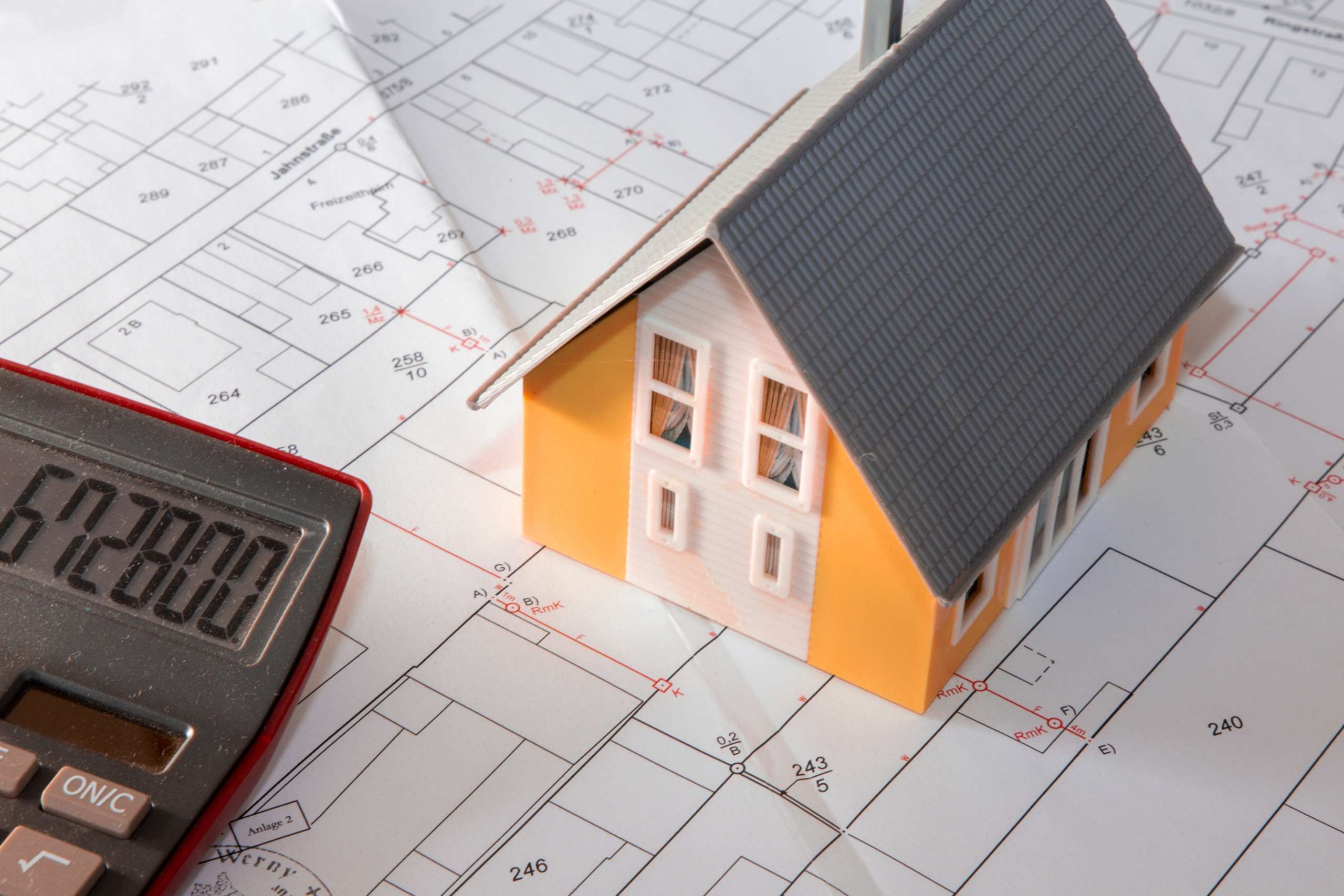
Malaysia has 33,094 brand new homes that nobody has bought.
More than a third of them cost RM300,000 or less.
That doesn't fit the usual story. We keep hearing that homes are too expensive. Yet thousands of homes at the cheapest end of the market are finished and ready to move into, and still unsold.
So what is really going on? The National Property Information Centre (NAPIC) released its H1 2026 data on 10 September 2026, and the numbers explain a lot. Some of the answers aren't what you'd expect.
Key Takeaways
- Malaysia's housing overhang reached 33,094 completed unsold residential units worth RM17.78 billion in H1 2026, up 8.6% from 30,471 units in H2 2025 (NAPIC).
- 37.3% of these homes are priced at RM300,000 and below. That share was 43% to 47% in Q1 2026, so most of the new unsold stock is priced above RM300,000.
- Unsold serviced apartments, which NAPIC counts separately as commercial property, jumped 24.7% to 23,375 units worth RM19.33 billion.
- Developers named loan rejections (30%), high pricing (21%) and unreleased Bumiputera units (16%) as the top reasons units stay unsold (Rehda 1H2026 survey).
- Prices are not falling nationwide. The average Malaysian house price is RM506,317, up 0.9% year on year.
- A low price alone doesn't make a home affordable. Location, upfront cash, loan approval and the home itself decide whether it sells.
In this article
- What Is Malaysia's Housing Overhang?
- Why Are Affordable Homes Still Unsold in Malaysia?
- 3. The buyer wants the home, but the bank says no
- Which States Have the Most Unsold Homes in Malaysia?
- Will the Housing Overhang Make Property Prices Drop?
- What Does the Housing Overhang Mean for Buyers and Investors?
- Frequently Asked Questions About Malaysia's Housing Overhang
What Is Malaysia's Housing Overhang?
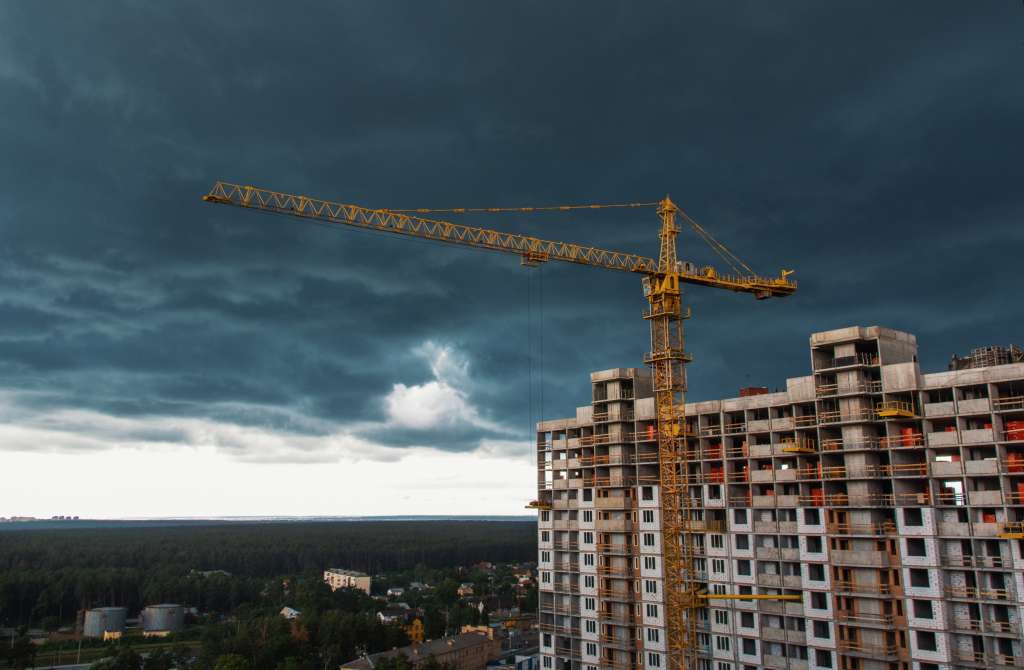
A housing overhang is a home that has been completed but remains unsold more than nine months after launch. This is NAPIC's official definition, and it is the figure most news reports quote.
Unsold units still under construction, and those not yet built, are tracked separately. So are serviced apartments, which NAPIC classifies as commercial property even though many people live in them.
Here is how the numbers moved in the first half of 2026.
Malaysia's complete unsold homes, H2 2025 vs H1 2026
Category | H2 2025 | H1 2026 | Change |
|---|---|---|---|
Residential overhang (units) | 30,471 | 33,094 | +8.6% |
Residential overhang (value) | RM17.73 billion | RM17.78 billion | +0.3% |
Serviced apartments (units) | 18,752 | 23,375 | +24.7% |
Serviced apartments (value) | RM15.42 billion | RM19.33 billion | +25.4% |
Source: NAPIC Property Market Report H1 2026, released 10 September 2026, as reported by Malay Mail and The Edge Malaysia.
Add both categories together and Malaysia has 56,469 completed, unsold homes worth RM37.11 billion.
The residential overhang also has a clear profile:
- 43.4% are high-rise units and 34.9% are terraced houses.
- 38% were launched six to 10 years ago, so a large part of this is old stock.
- 37.3% are priced at RM300,000 and below. That works out to roughly 12,300 homes, based on our calculation.
The detail most reports miss: the affordable share is shrinking
In Q1 2026, NAPIC figures cited in Parliament and by the National House Buyers Association (HBA) put homes priced at RM300,000 and below at 43% to 47% of the overhang. By H1 2026, that share had fallen to 37.3%.
Over the same period, the number of unsold units rose by only 293 (from 32,801 to 33,094). Their total value rose by about RM1.41 billion (from RM16.37 billion to RM17.78 billion). Most of the new unsold stock is priced well above RM300,000. On average, each unsold home is now worth around RM537,000.
The government has said the same. Deputy Housing and Local Government Minister Datuk Aiman Athirah Sabu told the Dewan Rakyat on 29 June 2026: "This shows that unsold housing is not limited to affordable housing alone."
AUTHOR'S TAKEI think the headline number hides the real story. Yes, thousands of RM300,000 homes are unsold. But that pile is getting smaller, while the pricier stock above it keeps growing. To me, Malaysia doesn't have a cheap-homes problem. It has a problem with homes built in the wrong place, in the wrong form, at the wrong time. |
How much home can your salary actually carry?
See the loan amount banks typically approve at your income level before you start viewing.
Check your loan limit → play-button1 Why Are Affordable Homes Still Unsold in Malaysia?
Developers have told us why. In Rehda's 1H2026 Property Industry Survey of 181 developers, the top reasons units stayed unsold were loan rejections (30%), high pricing (21%) and unreleased Bumiputera units (16%).
Rehda president Datuk Zaini Yusoff summed it up on 23 September 2026: "Housing affordability should not be viewed solely from the perspective of property prices."
Here are the four reasons that matter most to buyers.
1. The price is affordable, but the location isn't
Many low-cost projects are built where land is cheap. That usually means far from jobs, trains and schools.
Tang Chee Meng, chief operating officer of Henry Butcher Real Estate, told The Edge Malaysia in August 2026: "The locations of these houses are often unsuitable for intended buyers."
Let's work through the numbers. Say a home is RM80,000 cheaper but adds 40km each way to your drive to work.
Worked example: is the cheaper, far-away home really cheaper
Item | Per month |
|---|---|
Instalment saved on an RM80,000 lower price (90% loan, 4%, 35 years) | RM319 saved |
Extra fuel for 1,760km (80km a day x 22 days, at 12km per litre, RON95 RM1.99) | RM292 |
Extra tolls (RM4 each way x 44 trips) | RM176 |
Net result | About RM149 worse off |
Illustrative only. Excludes car wear, parking and roughly 1.5 extra hours on the road every working day.
The lower price is cancelled out by the commute, and you also lose time with your family. That's why many buyers would rather keep renting near work than buy a cheap home far away.
2. A RM300,000 home still needs close to RM40,000 in cash
The price tag is only where the costs start. Here's what a first-time buyer pays on a RM300,000 home with a 90% loan.
The real cost of a RM300,000 first home (2026)
Cost | Estimated amount |
|---|---|
10% down payment | RM30,000 |
Legal fees, SPA and loan agreement (SRO 2023 scale, incl. 8% service tax) | About RM7,700 |
Stamp duty on transfer and loan (first home up to RM500,000, until 31 Dec 2027) | RM0 |
Cash needed before keys | About RM37,700 + disbursements |
Monthly instalment (RM270,000 loan, 4%, 35 years) | About RM1,195 |
Total interest paid over 35 years | About RM232,100 |
Illustrative calculation. Excludes valuation, disbursements, insurance, maintenance fees and furnishing. Actual rates and approval depend on your bank.
A household that can afford RM1,195 a month may still not have RM37,700 saved. That's how a home can be affordable on paper but out of reach in cash. Our guide to the real cost of buying a house in Malaysia lists every fee, and the i-Miliki stamp duty exemption explains what first-time buyers save.
Want to try your own numbers? Change the price, rate and tenure below.
Estimates for guidance only. Actual figures depend on the bank's assessment, current rates and your full financial profile.
3. The buyer wants the home, but the bank says no
Loan rejection is the single biggest reason units stay unsold, at 30% of cases in Rehda's survey. Zaini also said: "Among the main factors contributing to housing loan rejection were purchasers' income eligibility."
Banks look at your debt service ratio (DSR), which is all your monthly debt repayments as a share of your income. The instalment is only one part of it.
Add the RM1,195 instalment to a RM600 car loan and a RM150 PTPTN repayment. Your commitments are now about RM1,945 a month. For many young buyers, that's where the application gets rejected.
Gig workers and the self-employed face an extra hurdle because they can't show regular payslips. Juwai IQI has called on Budget 2027 to offer more creative financing for this group, including rent-to-own and shared ownership.
Check where you stand before you apply:
Each bank sets its own DSR limits. Use this as a guide, not an approval.
Help does exist. Budget 2026 set aside a RM20 billion guarantee under the Housing Credit Guarantee Scheme (SJKP), expected to benefit about 80,000 homebuyers. Compare your options in our first home schemes guide.
4. The home doesn't fit how people live today
Remember, 38% of the overhang was launched six to 10 years ago. Many of these homes were planned before the pandemic, before working from home and before new rail lines changed which areas are in demand.
Tang put it this way: "The size and design of the units may not meet the needs of targeted buyers." Sulaiman Saheh of Rahim & Co Chestertons was even more direct: "What people want is not just a RM300,000 house."
Common mismatches include small two-bedroom layouts for growing families, a single parking bay per unit and high-rise blocks with maintenance fees that push up the monthly cost. In some projects, unsold units are Bumiputera-quota units that have not been released to other buyers.
The key takeaway: for most buyers, an affordable home is one they can pay for, reach easily and actually live in, not just one with a low price.
AUTHOR'S TAKEYoung buyers don't usually ask, "Is it under RM300,000?" They ask, "Can I get to work by 8.30am?" and "Will the bank say yes?" If a home fails either test, a lower price won't change their mind. Before buying any "affordable" unit, I'd ask whether you would happily live there for 10 years. If the honest answer is no, it isn't really affordable for you. |
Which States Have the Most Unsold Homes in Malaysia?
Johor now has the most unsold homes in Malaysia, with 4,222 completed unsold residential units in H1 2026. It also leads in serviced apartments, with 9,946 unsold units, or about 43% of the national total.
Johor wasn't top of the list three months earlier. Here's the Q1 2026 ranking for comparison.
States with the highest residential overhang
State | Q1 2026 (units) | H1 2026 (units) |
|---|---|---|
Johor | 3,852 (2nd) | 4,222 (1st) |
Perak | 4,063 (1st) | Not yet published |
Selangor | 3,745 (3rd) | Not yet published |
Kuala Lumpur | 3,733 (4th) | Not yet published |
Penang | 3,165 (5th) | Not yet published |
Sources: NAPIC Q1 2026 Property Market Status Report via Penang Property Talk (2 July 2026); NAPIC H1 2026 report via Malay Mail (10 September 2026). We will update this table once the full H1 2026 state breakdown is public.
Johor's unsold stock grew by 370 units, or 9.6%, in a single quarter. Yet Juwai IQI data showed Johor subsale prices rising 8.3% in Q2 2026, among the fastest in the country.
Both trends can be true. Buyers are paying more for established homes in good locations, while new high-rise stock in less popular areas stays empty. State totals don't show this, so always look at the specific district and development. Our NAPIC Q1 2026 breakdown covers the state data in more detail.
Will the Housing Overhang Make Property Prices Drop?

Not across the country. The Malaysian House Price Index stood at 234.7 points in H1 2026. The average house price was RM506,317, up 0.9% year on year, even as unsold stock rose.
Stable borrowing costs are a big reason. The Overnight Policy Rate has stayed at 2.75% since July 2025. Kashif Ansari, Co-Founder and Group CEO of Juwai IQI, told Bernama in August 2026: "These stable financing conditions are one of the pillars that support the property market."
Prices are under pressure in specific places instead:
- Older unsold projects, where developers need to recover costs and may offer rebates, free legal fees or furnishing packages.
- Serviced apartments, where 55.2% of unsold units sit in the RM500,001 to RM1 million band.
- Areas with a lot of new supply. Rehda found 53% of new launches in 1H2026 were priced RM300,001 to RM500,000, so more homes in that price range are coming.
For the wider picture, see our Malaysia property market update and the latest subsale price data.
Can better planning stop the overhang from growing?
See how Budget 2027 could help prevent RM1.8 billion worth of homes from going unsold.
What Does the Housing Overhang Mean for Buyers and Investors?
For homebuyers: more room to negotiate
When a developer has finished units it can't sell, you have more room to negotiate. You can also see the actual unit, building quality and neighbourhood before you pay, which isn't possible with an off-plan purchase.
Just don't assume every unsold unit is a bargain. Ask these questions first.
Buying an unsold or overhang unit: 5 questions to ask
Ask | Why it matters |
|---|---|
Why hasn't it sold? | If it's the location or the layout, a discount won't fix that. |
How does the price compare with recent sales nearby? | The discount should be compared with transacted prices, not the developer's original asking price. |
How many units in the block are still empty? | Low occupancy can mean weaker maintenance-fee collection and slower resale. |
Can I pass a DSR check with room to spare? | You need a buffer for rate changes, repairs and life events. |
Will this still suit me in 10 years? | Think about marriage, children, a new job and how easy the home will be to resell. |
For investors: opportunities, but check the risks
A large overhang can get you better purchase terms. But it also means more competition for tenants. If 200 empty units in your block are listed for rent, your rental yield falls.
Before you invest, check actual rental demand nearby, recent transacted prices and how many new units are coming. Find out why the units are unsold, not just how many there are.
Malaysia does not simply need more homes. We need the right homes, at the right prices and in the right locations.
AUTHOR'S TAKEMy advice is to approach an overhang unit the way you would a subsale. Check the sale prices of comparable units nearby, visit at night and during rush hour, and get the developer's final offer in writing. A discount on a good home in the right area is a great deal. A discount on the wrong home is just a cheaper mistake. |
The bottom line
Malaysia's housing overhang isn't just a story about 33,094 empty homes. It shows a gap between what gets built and what Malaysians can actually pay for, reach and live in.
For buyers, the cheapest home is not always the most affordable one in the long run. Choose a home that works for your budget, your commute and your loan. If you're starting out, our complete guide to buying a house in Malaysia takes you through every step.
Frequently Asked Questions About Malaysia's Housing Overhang
How many unsold homes are there in Malaysia in 2026?
Malaysia recorded 33,094 completed unsold residential units worth RM17.78 billion in H1 2026, up 8.6% from 30,471 units in H2 2025, according to NAPIC. Another 23,375 unsold serviced apartments worth RM19.33 billion are counted separately as commercial property
What is a housing overhang in Malaysia?
Under NAPIC's definition, a housing overhang is a completed residential unit that remains unsold more than nine months after launch. Unsold units under construction and serviced apartments are reported separately.
Why are affordable homes still unsold in Malaysia?
Developers in Rehda's 1H2026 survey cited loan rejections (30%), high pricing (21%) and unreleased Bumiputera units (16%) as the top reasons. Poor locations, upfront cash costs of close to RM40,000 on a RM300,000 home, and outdated layouts also keep buyers away.
Which state has the highest housing overhang in Malaysia?
Johor had the highest residential overhang in H1 2026, with 4,222 completed unsold units. It also led in unsold serviced apartments with 9,946 units. In Q1 2026, Perak was first with 4,063 units.
Will the housing overhang cause property prices to fall in Malaysia?
Not nationwide. The average Malaysian house price was RM506,317 in H1 2026, up 0.9% year on year. Price pressure is more likely in older unsold projects, serviced apartments and areas with heavy new supply.
Should I buy an overhang property in Malaysia?
It can be a good deal if the price is below recent transacted prices nearby, the location suits your daily life and you can pass a DSR check with a buffer. Always find out why the unit has not sold before you commit.
Thousands of unsold homes. But which one is worth buying?
Let an IQI agent help you compare prices, spot better deals and find a home that fits your budget.
Leave your details below and find your next home with IQI.
[custom_blog_form]
C
Sources
- Malay Mail, "Malaysia's unsold completed homes rise 8.6pc in H1 2026", 10 September 2026
- The Edge Malaysia, NAPIC 1H2026 Property Market Report coverage, 10 September 2026
- EdgeProp, Daily Digest (House Price Index H1 2026), 11 September 2026
- EdgeProp, Rehda Property Industry Survey 1H2026, 23 September 2026
- Malay Mail, Rehda 1H2026 survey findings, 23 September 2026
- Malay Mail, Q1 2026 overhang in the Dewan Rakyat, 29 June 2026
- The Edge Malaysia, "Why aren't Malaysians buying affordable residential units priced below RM300,000?", 17 August 2026
- Penang Property Talk via Newswav, Q1 2026 state overhang ranking, 2 July 2026
- BernamaBiz, "Subsale house market to continue growing in 2H 2026: Juwai IQI", 18 August 2026
Ready to Find Your Perfect Property?
IQI Global understands the property market intimately. We're not just agents — we're guides helping you understand investment potential, lifestyle benefits, and long-term value.
Know the author
Safarah is a Content Growth Executive at IQI, with a Bachelor’s Degree in Public Relations and a growing passion for turning insights into impact. She never starts work without Spotify on, music first, then ideas.
Unlock Exclusive Insights
Subscribe to our emails to find out about the latest market insights, property news and trends.
Ready to Find Your Perfect Property?
IQI Global understands the property market intimately. We're not just agents — we're guides helping you understand investment potential, lifestyle benefits, and long-term value.
You may also like

How Industrial Growth Is Reshaping Malaysia’s Property Market in 2027
Indonesia Global Market Insights: Prices, Yields & Outlook 2026