Pakistan Real Estate Market Insights 2026

TL;DRPakistan’s real estate market in 2026 offers strong residential demand and potentially higher returns from selected commercial properties. Annual property turnover is estimated at PKR 7.1 trillion, or 6.7% of GDP, while the national average gross apartment rental yield was 6.53% in Q3 2025. In Karachi, DHA detached houses yield about 3.36%–5.50%, compared with 8.00%–13.00% for Grade-A commercial properties along Shahrah-e-Faisal, making location and property type key factors for investors. |
A plot in Karachi, an apartment in Islamabad and a shop in Lahore can all sit under the Pakistan real estate label, but they behave like cousins at a wedding: related, not identical.
Residential property follows household demand, affordability and rent; commercial property depends more on business demand, footfall and occupancy. This guide compares both sides of the market using concrete 2026 figures, not one-size-fits-all hype.
Key Takeaways
- The Karachi property market recorded about 16.6% year-on-year house-price growth in June 2026.
- The national gross rental yield in Pakistan, on average, for apartments stood at 6.53% in Q3 2025.
- In February 2026, average house prices stood at approximately PKR 83.6 million in Islamabad, PKR 77.7 million in Karachi, and PKR 52.1 million in Lahore.
- In the Pakistan commercial real estate market, Grade-A commercial properties along Shahrah-e-Faisal can generate gross yields of 8.00% to 13.00%, compared with 3.36% to 5.50% for detached houses in DHA Karachi.
- Pakistan’s residential mortgage market was estimated at only about 0.5% of GDP in 2025, making limited access to financing a major constraint on the Pakistan housing market.
Get Updated on Pakistan Market
- 1. What makes Pakistan an attractive real estate Investment Destination?
- 2. How is Pakistan's economy performing right now?
- 3. What is happening in Pakistan's property market in 2026
- 4. How much can you earn from property investment in Pakistan?
- 5. Where are the best places to invest in Pakistan right now?
- 6. What do experts say about the market?
- 7. Can foreigners buy property in Pakistan? What are the rules?
- 8. Frequently Asked Questions (FAQs)
1. What makes Pakistan an attractive real estate Investment Destination?
Pakistan’s main attraction is a largehousing market, ongoing household formation, undersupplied urban housing, and commercial demand driven by expanding cities. The opportunity is not simply “property prices will rise.” Structural changes are driving residential demand and commercial activity and can last much longer than a speculative cycle.
Global Property Guide reported a population of 241.5 million in the 2023 census and 38.34 million households, while its PMRC-based analysis estimated roughly 36.24 million residential units nationally. The same analysis calculated a basic shortage of about 2.10 million units under a one-household-per-unit methodology.
That shortage should not be confused with every larger housing shortage headline in Pakistan. Milkiyat’s coverage of National Housing Policy 2025 cited an estimated shortage of around 13 million units, but also noted that the calculation method was not disclosed. The difference matters because one figure measures a basic unit shortfall while broader estimates can include affordability, quality and other housing deficiencies.
Residential demand also has a strong overseas link.
Dawn reported that Pakistan received US$41.6 billion in workers’ remittances in FY2025-26 and that households receiving foreign remittances accounted for about 29% of measured construction and home-improvement spending despite representing fewer than one in ten households. That creates a natural base for the Pakistan property market for overseas investors, particularly in new homes, apartments and managed residential projects.
The commercial side benefits differently from urbanization in Pakistan's real estate trends. More occupied housing creates customers for shops, offices, services and mixed-use projects. Commercial property therefore works best where residential density becomes real occupancy, not merely where large numbers of plots have been sold on paper.
For investors, that distinction is crucial. Residential property can benefit simply from a large pool of households needing somewhere to live. Retail, office and mixed-use assets need those households to live, work and spend within the catchment before commercial rents become sustainable.
2. How is Pakistan's economy performing right now?
Pakistan’s economy provides a more stable backdrop than during its most volatile recent periods, but Pakistan real estate investment is still operating in a relatively expensive financing environment. That affects residential buyers who need mortgages and commercial investors who rely on leverage or compare property yields with financial returns.
IQI Global listed the policy rate at 11.50%, inflation at 11.70%, foreign-exchange reserves at US$22.04 billion, and PKR/USD at 278.16.
Economic indicator | Reported figure | Residential impact | Commercial impact |
|---|---|---|---|
Policy rate | 11.50% | Mortgage affordability remains difficult | Debt-funded acquisitions face a higher hurdle rate |
Inflation | 11.70% | Construction and household budgets remain sensitive | Fit-out, replacement and operating costs matter more |
Forex reserves | US$22.04B | Greater macro stability can help buyer confidence | Stability helps long-horizon business planning |
PKR/USD | 278.16 | Foreign-currency buyers evaluate local prices differently | Overseas capital can compare Pakistan yields with other markets |
Source: IQI Global
The practical effect of the housing market rate environment is simple: a property can look affordable in cash terms while being much less affordable when financed. Global Property Guide estimated residential mortgages at roughly 0.5% of GDP in 2025, so formal mortgage lending remains small relative to the size of the property economy.
For commercial property, higher borrowing costs raise the return an investor needs to justify using debt. IQI Global described KIBOR plus roughly 150–300 basis points as a factor limiting leveraged and speculative buying.
This favors buyers with patient capital. In residential markets, that means focusing more on actual rental demand and delivery quality. In commercial markets, it means paying closer attention to rental yield, vacancy risk, and whether a business tenant can realistically support the asking rent.
3. What is happening in Pakistan's property market in 2026
The Pakistan real estate market outlook for 2026 is positive in some segments but highly uneven. Residential prices are rising in several markets, apartment demand is growing in major cities, and completed projects are attracting attention. Commercial opportunities are increasingly tied to occupied catchments, transit, retail activity, and mixed-use development rather than speculative land alone.
Business Recorder reported that residential prices in major cities had risen by an estimated 10%–15% over the preceding weeks as investor demand strengthened. That was a short-period market estimate rather than a national price index, so it should not be treated as a guaranteed annual growth rate.
a. How are residential prices and yields comparing by city?
Global Property Guide’s February and Q3 datasets show why Pakistan property prices need to be compared city by city rather than through one national average.
City | Avg. house price, Feb. 2026 | Avg. apartment price, Feb. 2026 | Avg. gross apartment yield, Q3 2025 |
|---|---|---|---|
Islamabad | PKR 83.6M | PKR 25.5M | 7.01% |
Karachi | PKR 77.7M | PKR 27.0M | 6.50% |
Lahore | PKR 52.1M | PKR 23.8M | 5.87% |
Rawalpindi | PKR 35.0M | PKR 12.1M | 6.73% |
Source: Global Property Guide
The table shows why Islamabad property market pricing cannot be read the same way as Lahore or Rawalpindi. Islamabad had the highest average house price among these cities, while its apartment yield average was also the strongest of the four in the Q3 2025 dataset.
The Karachi property market offers another pattern. Apartment prices were the highest of the four cities in February 2026, while its commercial micro-markets show much wider income potential depending on property type.
B. What is happening in commercial property?
IQI Global 2026 Karachi analysis shows the spread clearly. Grade-A commercial property on Shahrah-e-Faisal was shown at 8.00%–13.00% gross rental yields, while residential yields ranged from 3.36%–5.50% for DHA detached houses, 4.00%–6.50% for Clifton luxury apartments and 4.50%–6.00% for Bahria Town Karachi villas.
Karachi segment | Property type | Gross yield range |
|---|---|---|
Shahrah-e-Faisal | Grade-A commercial | 8.00%–13.00% |
Gulshan/Jauhar | Mid-rise homes | 6.50%–8.20% |
Scheme 33 | Suburban homes | 5.50%–7.20% |
Clifton | Luxury apartments | 4.00%–6.50% |
Bahria Town Karachi | Villas | 4.50%–6.00% |
DHA Karachi | Detached houses | 3.36%–5.50% |
Source: IQI Global
This does not mean Pakistan's commercial real estate market assets automatically beat homes. A commercial shop with weak footfall can sit empty longer than a well-priced apartment. The higher yield is compensation for factors such as vacancy, tenant concentration, and location risk.
These properties look attractive, but they need your first step. Let us guide you on this Pakistan property-buying journey!
C. Why are high-rise and mixed-use projects gaining attention?
Higher land values and denser cities make high-rise apartment developments in Pakistan a practical response to urban growth. Apartments also suit buyers who want security, amenities, and easier property management, especially when they live abroad.
For commercial investors, mixed-use developments in Pakistan can concentrate residents, offices, and retail demand in one location. Their success still depends on real occupancy. A glossy ground-floor retail plan is not the same thing as customers walking past the door every afternoon.
A current Grade A office space Pakistan occupancy figure for Islamabad or Lahore is not established here, so no office-occupancy percentage is presented. The commercial analysis therefore focuses on property types for which usable 2026 pricing, yield or market evidence is available.
4. How much can you earn from property investment in Pakistan?
Returns from property investment come from two places: income while you own the property and any capital gain when you sell it. Residential and commercial property can provide both, but the balance is different.
For residential investors, Global Property Guide recorded national apartment gross yields between 3.16% and 12.9% in Q3 2025, with a national average of 6.53%.
For commercial investors, UnionDevelopers described 6%–10% gross yields as a typical benchmark for established commercial real estate locations. That range is broadly consistent with IQI Global’s stronger Karachi commercial examples, although individual properties can perform very differently.
A useful calculation is straightforward. UnionDevelopers used a PKR 15 million purchase generating PKR 1.2 million in annual rent as an example of an 8% gross rental yield.
PKR 1.2 million annual rent ÷ PKR 15 million purchase price = 8% gross yield.
Gross yield is not your take-home return. Residential owners may face maintenance, vacancy, and management costs; commercial property owners may also face longer vacancy periods, fit-out issues, and tenant-specific expenses. Purchase taxes, transfer costs, and eventual selling costs further reduce total returns.
Capital appreciation can materially change the picture. IQI Global put Clifton residential pricing at PKR 15.6 crore with 16% year-on-year appreciation.
The same IQI Global snapshot showed net yields for DHA Phase 8 commercial property at 11%–13%.
These numbers show why “Which is better, residential or commercial?” has no universal answer. Residential property typically offers a larger pool of occupiers and buyers, while well-located commercial assets can generate more income. The right comparison is net return after vacancy, expenses, taxes, and financing, not the biggest percentage in a sales brochure.
5. Where are the best places to invest in Pakistan right now?
The best cities for real estate investment in Pakistan 2026 depend on whether the investor wants rental income, capital preservation, active value creation, or a longer development play. Islamabad, Karachi, Lahore, and Rawalpindi each offer a different mix.
a. Islamabad: premium residential pricing and planned growth
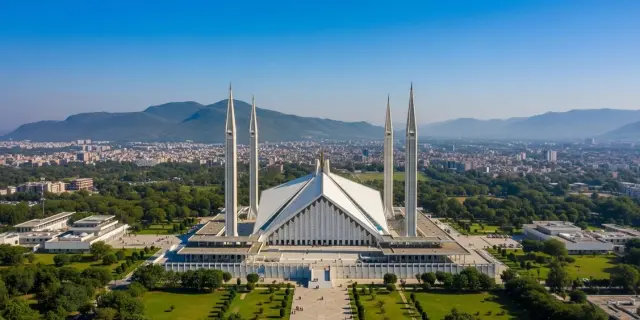
Islamabad suits investors who want exposure to apartments in Pakistan and established residential demand in a planned urban environment. Global Property Guide recorded an average house price of PKR 83.6 million and an apartment price of PKR 25.5 million in February 2026, with an average apartment gross yield of 7.01% in Q3 2025.
For commercial property, Islamabad’s growth case is more closely tied to mixed-use development, offices, retail and the expansion of populated residential communities. Investors should distinguish a building with functioning tenants from an off-plan project whose future footfall exists only in a projection.
B. Karachi: scale plus strong commercial yield pockets
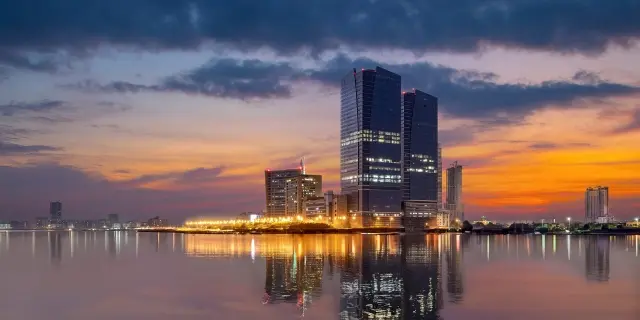
Karachi offers one of Pakistan's clearest residential-versus-commercial contrasts in the property market. Global Property Guide recorded average February 2026 prices of PKR 77.7 million for houses and PKR 27 million for apartments.
On the retail real estate market and broader commercial side, yield depends heavily on the business corridor. IQI Global put Shahrah-e-Faisal Grade-A commercial at 8%–13% gross yield while several residential segments sat below that range.
If you are interested in Karachi property, approach our team now for more information!
C. Lahore: deep residential demand and an active commercial market
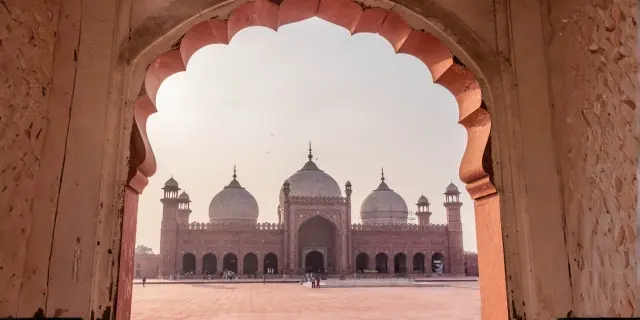
Lahore remains a major property market for homebuyers and investors alike. Global Property Guide recorded average February 2026 prices of PKR 52.1 million for houses and PKR 23.8 million for apartments.
Commercial investors in Lahore need to look beyond the word “commercial” on a site plan. Retail property performance in Pakistan depends on actual nearby residents, road visibility, parking, utilities, and commercial-use approval. The same logic applies to offices: businesses pay for accessibility and usable space, not simply a prestigious project name.
D. Rawalpindi: lower residential entry prices with urban-growth potential
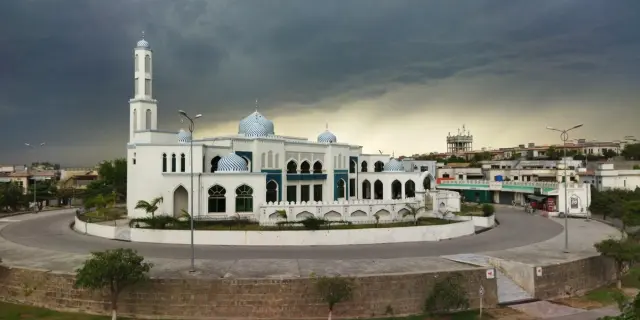
Rawalpindi had a lower average residential property entry point than Islamabad in Global Property Guide’s February 2026 dataset: PKR 35 million for houses and PKR 12.1 million for apartments. Its Q3 2025 average apartment gross yield was 6.73%.
The commercial plots in Pakistan case depends on development becoming an occupied catchment. Road projects and new communities may improve accessibility, but a commercial asset still needs businesses and customers before theoretical appreciation turns into usable income.
City | Residential case | Commercial case | Best suited to |
|---|---|---|---|
Islamabad | Premium pricing, strong apartment yields | Mixed-use, retail and office demand as communities densify | Stability and managed residential assets |
Karachi | Large market with varied residential segments | Strong yield pockets in established commercial corridors | Income-focused investors comfortable with micro-market differences |
Lahore | Broad residential choice and apartment growth | Retail, commercial plots and mixed-use opportunities | Investors seeking a deep local market |
Rawalpindi | Lower average entry prices than Islamabad | Growth linked to populated new corridors | Buyers balancing entry cost and longer-term expansion |
The practical lesson is that capital appreciation in Pakistan property decisions should start with the micro-market. A strong city cannot rescue a weak building, and a fashionable housing scheme cannot guarantee a profitable shop.
6. What do experts say about the market?

Junaid Hamid, Head of IQI Karachi Pakistan, highlighted an 11.50% policy rate, 11.70% inflation, US$22.04 billion in foreign-exchange reserves and an exchange rate of PKR 278.16 per US dollar. For both residential property and commercial assets, He describes a market where macro stability has improved, but capital remains expensive.
He also put the citywide gross residential yield at 6.67%, while Grade-A Shahrah-e-Faisal commercial property was shown at 8%–13%. The gap supports a value-led approach: compare actual income by asset type instead of assuming all Pakistan property offers the same return.
Gohar Ali Khan of Business Recorder reported that Pakistan property prices in major cities rose by an estimated 10%–15% over the preceding weeks. That points to stronger sentiment, but a short-term jump should not be extrapolated into a multi-year forecast for either residential or commercial assets.
Delivery quality is another recurring issue in Pakistan real estate investment. Aqib H Shah, Chief Commercial Officer of One Homes, said after completion of its Lahore residential project: “If it can be done in New York, London or Dubai, it can be done in Pakistan.” For investors, the takeaway is broader than luxury housing: developer execution matters as much for an apartment tower as for a retail or mixed-use project.
The combined view is less exciting than a “prices only go up” headline, which is probably a good thing. Demand in Pakistan's residential real estate market is substantial, and commercial yields can be compelling in the right location, but financing costs, documentation, and project quality still separate investable assets from speculative ones.
7. Can foreigners buy property in Pakistan? What are the rules?
Foreign nationals working or residing in Pakistan can buy or rent property, but foreign property ownership transactions in Pakistan require specific legal formalities involving the Board of Investment and the Trade Development Authority of Pakistan.
That statement should not be stretched into “every foreigner can freely buy every property.” The exact approval path can vary, so anyone buying residential property should verify the title, transferability, project approval, taxes, and any applicable authority requirements before paying a deposit.
A foreign buyer considering commercial property should perform the same ownership checks and also confirm lawful commercial land use. A shop, office, or commercial plot is not safe merely because it is marketed for business use.
For either segment, a practical Pakistan property due diligence guide starts with six checks: ownership record, registry or title, project or land-use approval, NOC status where applicable, outstanding dues, and litigation or encumbrances. Developer delivery history matters particularly for off-plan residential towers and mixed-use commercial developments.
Current rules for using a Roshan Digital Account real estate route are not established here, so no claim is made about whether a specific RDA structure can fund a residential or commercial purchase. Likewise, no current minimum investment is stated for a Pakistan long-term residency program.
Foreign buyers should use a qualified property lawyer and tax adviser before completing a transaction. The same caution applies to overseas Pakistanis: familiarity with the country does not eliminate risks and returns related to title, approvals, payment records, or project delivery.
Thinking about buying property in Pakistan? Leave your worries behind and let IQI guide you step by step toward owning your dream home!
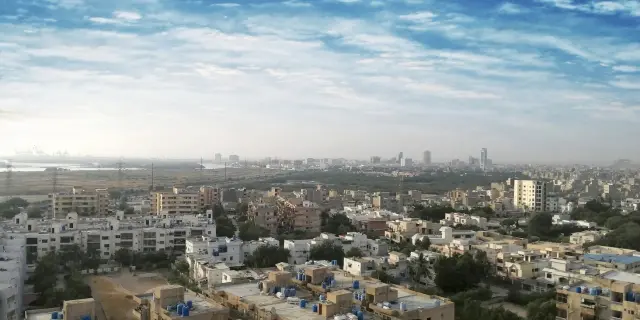
Pakistan is not one property market but a collection of residential and commercial property micro-markets. The 2026 opportunity is strongest where real demand, legal clarity, infrastructure, and realistic yields overlap.
Residential assets offer depth and housing-led demand; commercial assets can offer higher income in the right catchment. Investors should compare city, asset type, financing cost and exit liquidity before treating any headline return as a forecast.
8. Frequently Asked Questions (FAQs)
a. What is the outlook for Pakistan's real estate market in 2026?
The forecast for Pakistan's real estate market is constructive but uneven. Residential demand remains supported by housing needs and urban growth, while commercial returns depend more heavily on tenant demand and location. Business Recorder reported an estimated 10%–15% residential price increase over several weeks in major cities, but that short-period figure is not a nationwide annual forecast.
b. What is Pakistan's average gross rental yield?
Global Property Guide calculated a 6.53% national average rental yield for apartments in Pakistan in Q3 2025, with individual properties ranging from 3.16% to 12.9%. Commercial yields can be higher in strong business locations, but the range depends heavily on vacancy and tenant demand.
c. Which city in Pakistan has the best residential rental yield?
Among Karachi, Lahore, Islamabad and Rawalpindi, Global Property Guide recorded Islamabad’s Q3 2025 average apartment rental yield at 7.01%, compared with 6.73% in Rawalpindi, 6.50% in Karachi and 5.87% in Lahore. This comparison applies to apartments, not every residential or commercial asset in those cities.
d. Which is better in Pakistan, residential or commercial property?
Residential vs commercial property investment in Pakistan depends on the goal. Residential property generally suits investors who prioritize a broad occupier market and simpler resale, while well-positioned commercial assets can produce higher rental income but expose the owner to greater location, vacancy, and tenant risk.
e. What are the best cities for property investment in Pakistan?
Islamabad, Karachi, Lahore, and Rawalpindi offer different combinations of property prices, yields, and entry costs. Global Property Guide mentioned that average house prices ranged from PKR 35 million in Rawalpindi to PKR 83.6 million in Islamabad among these four cities. Commercial investors should then narrow the choice to actual business corridors and occupied catchments.
f. Can foreigners buy property in Pakistan?
Foreign nationals working or residing in Pakistan may buy or rent property, subject to legal formalities. Buyers should verify current requirements, title, approvals, transferability, and taxes before purchasing either residential or commercial real estate.
g. What should investors check before buying property in Pakistan?
Before investing in Pakistan real estate, verify ownership, title or registry records, NOC and planning approvals where applicable, land use, transferability, outstanding dues, tax position, and litigation. Commercial buyers should additionally test footfall and tenant demand; residential buyers should assess completion status, livability, and realistic rent.
Explore residential and commercial opportunities in Pakistan with IQI Global and speak with a local property professional before making your next move.
[custom_blog_form]
References
- Delmendo, L. C. (2026, March). Pakistan's residential property market analysis 2026. Global Property Guide. Retrieved fromhttps://www.globalpropertyguide.com/asia/pakistan/price-history
- FinanceWire. (2026, October 4). One Homes completes One Canal Road in Lahore, a new benchmark for luxury real estate delivery in Pakistan. markets.businessinsider.com. Retrieved fromhttps://markets.businessinsider.com/news/currencies/one-homes-completes-one-canal-road-in-lahore-a-new-benchmark-for-luxury-real-estate-delivery-in-pakistan-1036595589
- Hamid, J. (2026, August). Pakistan stability, reform and yield-drive growth. IQI Global. Retrieved fromhttps://iqiglobal.com/blog/wp-content/uploads/2026/07/Juwai-IQI-Newsletter-August-2026-15.pdf
- Hamid, J. (2026, October). Pakistan: Resilience in a high-rate market. IQI Global. Retrieved fromhttps://iqiglobal.com/blog/wp-content/uploads/2026/10/Juwai-IQI-Newsletter-October-2026-15.pdf
- Iqbal, A. (2026, June 9). Commercial real estate in Pakistan: A complete investor’s guide for 2026. UnionDevelopers. Retrieved fromhttps://www.uniondevelopers.com/blog/commercial-real-estate-in-pakistan/
- Khan, A. H. (2026, October 4). Why Pakistan saves in plots. Dawn. Retrieved fromhttps://www.dawn.com/news/2033860
- Khan, G. A. (2026, July 28). Property demand, prices surge across Pakistan’s major cities. Brecorder. Retrieved fromhttps://www.brecorder.com/news/40432214/property-demand-prices-surge-across-pakistans-major-cities
- Khan, M. (2026, October 6). Pakistan launches National Housing Policy 2025, first update in nearly 25 years. Milkiyat.com. Retrieved fromhttps://milkiyat.com/articles/pakistan-launches-national-housing-policy-2025-first-update-in-nearly-25-years
- One Homes. (2026, February 5). Pakistan property market predictions for 2026 and beyond. onehomes.com. Retrieved fromhttps://onehomes.com/blog/pakistan-property-market-predictions-for-2026-and-beyond
- One Homes. (2026, July 13). High ROI real estate zones in Pakistan (2026). onehomes.com. Retrieved fromhttps://onehomes.com/blog/best-high-roi-property-investment-areas-in-pakistan
Ready to Find Your Perfect Property?
IQI Global understands the property market intimately. We're not just agents — we're guides helping you understand investment potential, lifestyle benefits, and long-term value.
Know the author
As a SEO Content Writer at IQI Global, he collaborates with a team of content and SEO professionals to produce high-quality content for IQI and Juwai websites of the real estate industry.
Unlock Exclusive Insights
Subscribe to our emails to find out about the latest market insights, property news and trends.
Ready to Find Your Perfect Property?
IQI Global understands the property market intimately. We're not just agents — we're guides helping you understand investment potential, lifestyle benefits, and long-term value.
You may also like

How Industrial Growth Is Reshaping Malaysia’s Property Market in 2027
Indonesia Global Market Insights: Prices, Yields & Outlook 2026